Senior Marketing and Growth Executive
Richard Hill
I build stronger brands, modern marketing functions and customer-led growth strategies that deliver measurable commercial results.With more than 20 years of leadership experience across building materials, home improvement, retail, logistics and B2B services, I have led business transformation, go-to-market strategy, brand development, digital growth, customer insight and sales and marketing alignment.Looking for growth strategy or advisory support? Visit Strategic Growth Partners

Executive Leadership
Building
Customer-Led Growth
My work sits at the intersection of marketing, sales, product, customer experience and business strategy. I help organizations identify where they can win, build a clear commercial plan and create the capabilities required to execute it.I am most effective in businesses with strong operational foundations that need sharper market focus, stronger customer understanding, better sales and marketing alignment, or a modern marketing function capable of turning strategy into action.My leadership approach combines strategic clarity with practical execution. That means getting into the market, listening directly to customers, working closely with sales and operations, and ensuring that plans translate into measurable business performance.Growth Strategy
Market prioritization, segmentation, go-to-market planning and commercial growth.Marketing Transformation
Building modern teams, capabilities, processes, technology and measurement.Customer and Market Insight
Using research, customer feedback and field experience to improve decisions.
Selected Business Impact
Strategy That Delivers Results
A track record of turning customer insight, brand strategy and commercial discipline into measurable business results. Across building products, retail and B2B, my work has helped drive significant revenue growth, improve profitability, gain market share and build new digital revenue streams.


Executive Experience
Leadership across B2B, Retail & Home Improvement
Throughout my career, I have led marketing and commercial growth across national brands, dealer networks, manufacturing businesses and B2B service organizations.My experience includes executive leadership at Sealion Cargo and Cornerstone Building Brands Canada, more than a decade of marketing leadership with Home Hardware, and building the marketing organization supporting the Canadian launch and expansion of Ace Hardware with Lowe's Home Improvement.I have led teams and functions spanning marketing, sales, product management, research, digital, e-commerce, communications, customer experience and go-to-market strategy across Canada and the United States.Sealion Cargo - Chief Sales and Marketing Officer
Cornerstone Building Brands - Vice President Marketing
Ace Hardware | Lowe's - Head of Marketing
Home Hardware Stores Ltd | Havas - Senior Marketing Executive
SELECTED BRANDS
Experience across leading brands and businesses


Transforming Ply Gem and Cornerstone Canada
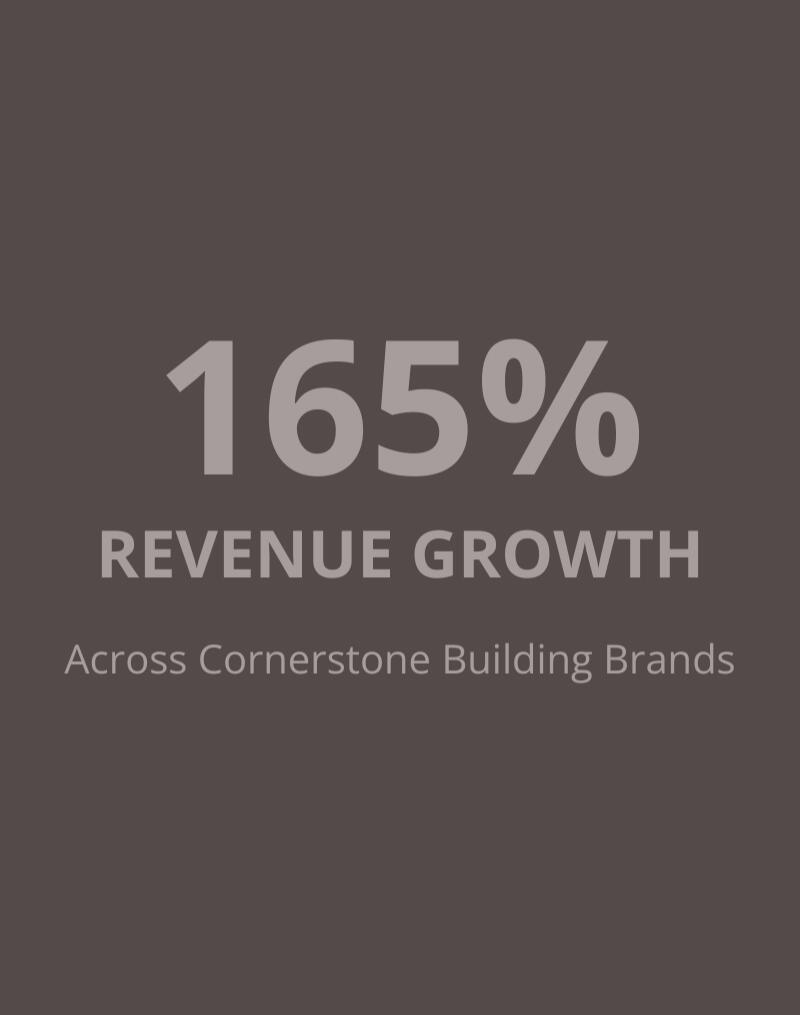
Rebuilt the strategic and marketing foundations across four Canadian business units, helping deliver 165% revenue growth, an 840-basis-point EBITDA improvement and a move from sixth to second in market share.
Repositioning an Iconic Canadian Retail Brand
Led the strategy and execution behind Home Hardware’s national rebrand, strengthening its differentiation around dealer ownership, service and community connection.



Building Ace Hardware Canada
Built the Canadian marketing organization, brand position and go-to-market capabilities that supported rapid dealer-network expansion and established Ace in the Canadian market.
CASE STUDY
Transforming Ply Gem and Cornerstone Canada

Rebuilding the strategic and marketing foundations of a national building products business to create stronger brands, sharper customer focus and significant commercial growth.
Business Challenge
When I joined Cornerstone Building Brands Canada as its first Vice President of Marketing, the Canadian organization consisted of several established building products businesses and brands, including Ply Gem, North Star, Mitten and Brock.There was significant opportunity, but marketing capabilities and strategic planning varied considerably across the businesses. Ply Gem in particular had received limited strategic and marketing support and was operating at approximately break-even. Brand awareness and consideration were low, its market position had weakened, and there was no clear customer-led roadmap for rebuilding the business.The opportunity went well beyond communications. We needed to better understand where each business could win, which customers offered the greatest potential, how our value propositions needed to evolve, and how marketing, sales, product and operations could work together around a common growth strategy.
My Leadership Role
As Vice President of Marketing, I led marketing, product management, customer and market insights, and go-to-market strategy across the Canadian organization.My mandate was to build a more strategic marketing capability while working directly with the business leaders and sales teams to identify growth opportunities and translate them into executable plans.Rather than treating marketing as a downstream communications function, we brought it much closer to the commercial decisions that were shaping the businesses. Customer insight, market opportunity, pricing, product strategy, brand positioning and sales priorities became interconnected parts of the growth plan.
The Strategy
We began by developing clearer strategic plans for the Canadian businesses, supported by extensive customer and market research.For Ply Gem, that meant redefining where the brand could win and rebuilding its positioning around the attributes that mattered most to builders, contractors, architects and channel partners. We introduced a new value proposition and used it to guide decisions across marketing, sales, product development, service and operations.We also developed Ideal Customer Profiles using factors such as customer value, profitability, growth potential and strategic fit. This helped sales and marketing concentrate resources on the customers and opportunities with the greatest potential rather than treating every account equally.A formal Voice of the Customer program provided an ongoing mechanism for understanding customer needs, identifying gaps and measuring whether the organization was improving in the areas customers valued most.These initiatives became part of a broader planning discipline designed to connect market opportunity with business priorities, investment and execution.
BRINGING THE STRATEGY TO MARKET
With the strategic foundation established, we rebuilt the way Ply Gem presented itself to the market.The brand was repositioned around quality, design and service, supported by a more contemporary visual and communications approach. We redeveloped the website, sales materials, digital and social presence, and broader communications program to create a more consistent customer experience.But the most important changes happened behind the communications. The new value proposition and customer insights influenced product development, service, sales priorities and operational decisions. Marketing became a mechanism for bringing the voice of the market into the business, not simply promoting what the business had already decided to sell.The approach ultimately became a North American case study within Cornerstone Building Brands.
165%
REVENUE GROWTH
Cornerstone Building
Brands Canada
840 BPS
EBITDA IMPROVEMENT
Growth, mix and commercial discipline
6th➔2nd
MARKET SHARE
Ply Gem's Canadian market position
WHAT THIS EXPERIENCE REINFORCED
Sustainable growth rarely comes from a single campaign or initiative. It comes from making better choices about where to compete, understanding which customers matter most, building a differentiated reason to choose you and aligning the organization around delivering it.The Cornerstone experience reinforced the value of connecting customer insight, strategy, marketing, sales, product and operations around a common growth agenda.
CASE STUDY
Repositioning Home Hardware

Using customer insight to sharpen the positioning of one of Canada’s most recognized retail brands and strengthen the connection between its national brand and locally owned dealer network.
Business Challenge
Home Hardware had tremendous brand recognition and a distinctive business model, but the retail environment was changing quickly. Large-format competitors were expanding, digital channels were becoming more important, and customers had more choices for home improvement products than ever before.At the same time, one of Home Hardware’s greatest competitive advantages was also difficult to communicate. Stores were independently owned and operated by local dealers, giving customers access to local knowledge, service and community connection that national competitors could not easily replicate.The opportunity was to better understand what customers valued about Home Hardware, identify what genuinely differentiated the brand and translate that into a stronger, more contemporary national position.
My Leadership Role
During more than a decade in national marketing leadership at Home Hardware, I was responsible for major areas of brand strategy, research, digital marketing, e-commerce, loyalty, social media and in-store marketing.For the brand repositioning, I worked with senior leadership, dealer-owners, internal teams and external research and agency partners to develop the strategic foundation and bring the new positioning to market.A key part of my role was ensuring the strategy worked at two levels. It had to strengthen Home Hardware as a national brand while remaining authentic to the independently owned businesses and local communities that made the organization different.
The Strategy
We began with extensive customer and market research to better understand how Canadians viewed Home Hardware, what drove consideration and loyalty, and where the brand had a meaningful advantage over larger competitors.The research reinforced the importance of the dealer relationship. Customers were not simply choosing a store based on products or price. They valued knowledgeable people, personal service, familiarity and a sense that the business was part of their community.That became an important foundation for the repositioning.Rather than trying to compete by looking more like the large national chains, the strategy was built around strengthening what was already distinctive about Home Hardware. The combination of national scale and local ownership provided a compelling position that competitors could not easily reproduce.The work helped establish clearer direction for brand communications, customer experience and marketing investment, while giving the broader organization a more consistent understanding of what the brand should stand for.
BRINGING THE STRATEGY TO MARKET
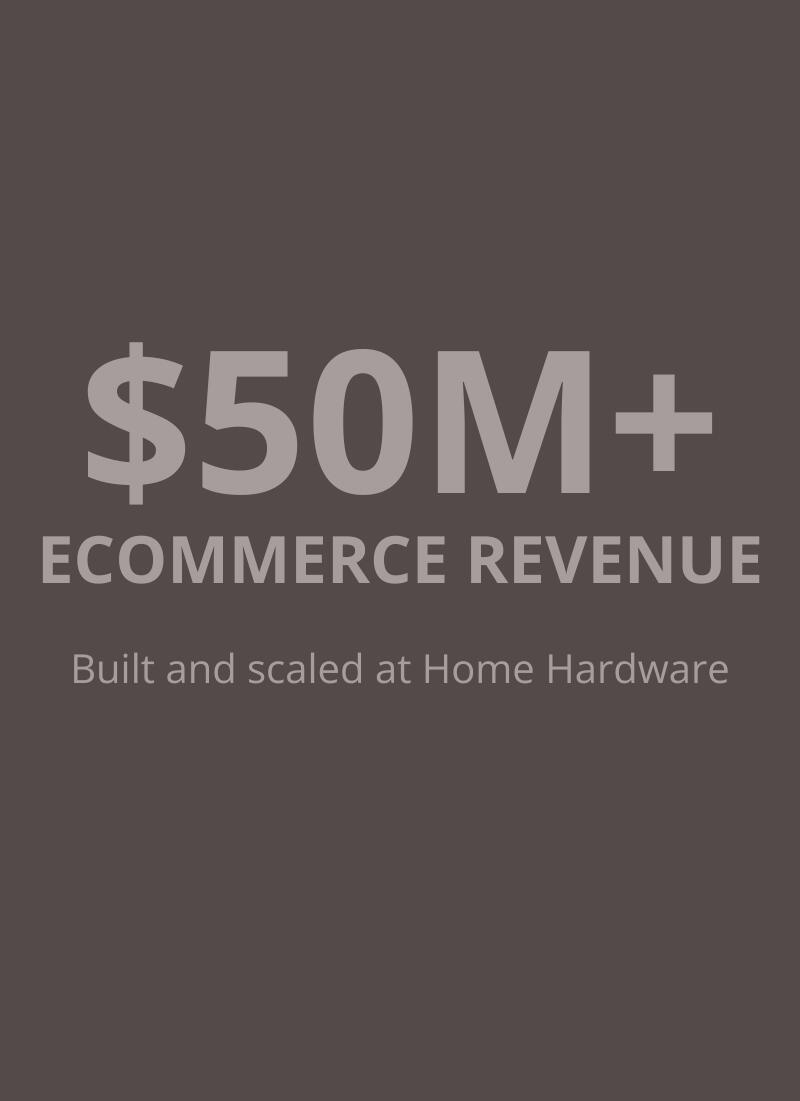
The positioning was translated across national advertising, digital channels, social media, in-store communications and other customer touchpoints.At the same time, we continued modernizing Home Hardware’s marketing capabilities. Digital and social media became increasingly important parts of the marketing mix, and we built an omnichannel e-commerce business that ultimately generated more than $50 million in annual revenue.The objective was not to replace the strength of the dealer relationship with technology. It was to use digital capabilities to make the brand more accessible while preserving the expertise, service and local connection that differentiated Home Hardware.That balance between national capability and local customer relationships became an important part of how I thought about the brand.
25%
INCREASE IN UNAIDED
BRAND AWARENESS
Improved brand salience and strengthened Home Hardware’s position with Canadian consumers.
$50M +
ANNUAL E-COMMERCE REVENUE
Built and scaled Home Hardware’s omnichannel e-commerce capability.
NATIONAL + LOCAL
DIFFERENTIATED BRAND MODEL
Strengthened the positioning around the combination of national scale, dealer ownership, service and community connection.
WHAT THIS EXPERIENCE REINFORCED
Strong brands are rarely created by inventing something entirely new. Often, the greater opportunity is identifying what is already genuinely different about a business and making it more relevant, consistent and visible to customers.The Home Hardware experience reinforced the importance of building strategy from customer insight while staying true to the operating model behind the brand. In this case, the dealer relationship was not simply part of the distribution model. It was one of the brand’s most important competitive advantages.
CASE STUDY
Building Ace Hardware Canada

Building the marketing organization, brand position and go-to-market capabilities to support the Canadian launch and rapid expansion of one of the world’s best-known hardware brands.
Business Challenge
When Lowe’s Canada held the Canadian licence for the Ace Hardware brand, it faced the challenge of establishing a globally recognized retail name in a market where Ace had relatively low awareness and understanding.The competitive environment was also changing. Ace needed to retain its established boomer customer while beginning to build relevance with Gen X and millennial shoppers. The brand needed a more contemporary Canadian presence without losing the helpful service proposition that was central to Ace globally.This was not simply an advertising assignment. The Canadian operation needed much of the marketing infrastructure required to support a growing national dealer network, from people and processes to digital platforms, promotional programs and customer communications.
My Leadership Role
Through Saffer Retail, I was embedded in the Ace Canada organization as the Head of Marketing, with responsibility for creating, managing and directing the Canadian marketing program.I helped build the marketing team in the new Mississauga office and establish the capabilities needed to support the business as it expanded. That included brand strategy, promotional planning, flyer development and distribution, digital and e-commerce, email marketing, social media, content development and dealer support.The role required working across the Ace organization and its independent dealers, balancing the consistency required to build a national brand with the needs of locally operated retail businesses.
The Strategy
We began with shopper research to understand the Canadian market, competitive pressures and the customer groups Ace needed to reach. The research identified three important challenges: changing demographics, increased competition and limited understanding of the Ace brand among Canadian consumers.The strategy was to modernize Ace without abandoning what made the brand distinctive.We built the Canadian positioning around Ace Helpful, reinforcing knowledgeable service while giving the brand a younger, more contemporary look and feel. The positioning was carried across channels and connected to specific categories, promotions and reasons for customers to visit an Ace store.Dealer participation was equally important. In a dealer-based business, the consumer proposition only works when the local operators believe in it and execute it. Marketing therefore had to create value for both the shopper and the dealer network.
BUILDING THE GO-TO-MARKET CAPABILITY
With the positioning established, we built much of the infrastructure required to bring Ace Canada to market consistently.We created the flyer development, production and distribution process, introduced a new visual approach across flyers and other communications, and developed category and promotional events around the Ace Helpful positioning.We also built a new e-commerce-enabled AceCanada.ca, developed an email acquisition and content program, and established Ace Canada’s presence across Facebook, Instagram and Twitter. Dealer training and content support helped extend these capabilities throughout the network.The result was more than a new marketing campaign. It was a functioning marketing platform capable of supporting a rapidly expanding Canadian retail network.
64➔106
DEALERS IN 9 MONTHS
Helped support the expansion of the Ace Canada network from 64 to 106 dealers during the initial launch period.
95%
DEALER PARTICIPATION
Achieved 95% dealer participation in the national flyer program, demonstrating strong adoption across an independently operated network.
BUILT FROM SCRATCH
MARKETING CAPABILITY
Established the Canadian marketing team and built the core flyer, digital, e-commerce, email, social and dealer-support capabilities required to scale the brand.
WHAT THIS EXPERIENCE REINFORCED
Launching a brand in a new market takes more than communications. It requires building the capabilities behind the brand, creating a proposition that works for the customer and the channel, and giving the organization the tools and processes to execute consistently.The capabilities established during the launch helped support a dealer network that would ultimately expand to 161 Canadian locations.The Ace Canada experience reinforced the importance of combining brand strategy, customer insight, digital capability and dealer engagement. In a dealer network, growth depends on earning adoption inside the organization as much as creating demand outside it.